
Custom
AI-Generated Designs for Creators Who Sell
Order custom t-shirt art, wall prints, clipart sets, and more — all tailored to your exact style!








In need of stunning images for your next project?
Let me help you by crafting accurate prompts to generate amazing quality outputs using Ideogram — no guesswork, no fluff. Whether you need bold t-shirt designs, cute clipart sets, moody book covers, or scroll-stopping Pinterest pins, I’ll handle the creative direction so you can focus on what you do best: creating, selling, and growing your brand. Pick your image type below, fill out a quick form, and I’ll take care of the visuals.
Hello There!
Hey, I’m Asha — your AI design whisperer! Fueled by caffeine and Ideogram, I use custom prompts and creative strategy to turn everyday ideas into scroll-stopping designs for shirts, prints, pins, and more. No fluff. No filler. Just clean, custom visuals you can actually use commercially.

Want a closer look at my design style?
I've built an impressive gallery of designs that should give you an idea as to the type of images I can create for you - especially for black colored apparel. Hit that button below and explore my public profile on Ideogram.

Custom AI-generated images made simple
How the Process Works

Step 1
Choose your design type + fill out a form.

Step 2
Pay 50% deposit and I get to work.

Step 3
Pay for the completed work and get your final files.

Want to Create Your Own Designs Like I Do?
Grab my exact prompt system and start designing with confidence in Ideogram.
Latest from the Blog
The 5 Seasons of Adulthood: Which Angel Era Are You?
The Show Ended. The Brooding Didn't.
Every Angel fan has a season they defend a little too aggressively.
Ask ten of us which one was best and you'll get a fistfight, two competing theories about Season 4, and at least one person who insists the whole thing peaked the moment the gang took over Wolfram & Hart. This is how fandom works. We pick a piece of media we love and then spend the next two decades arguing about which version of it understood us best.

But here's the thing I keep bumping into on rewatches: the show hasn't changed at all.
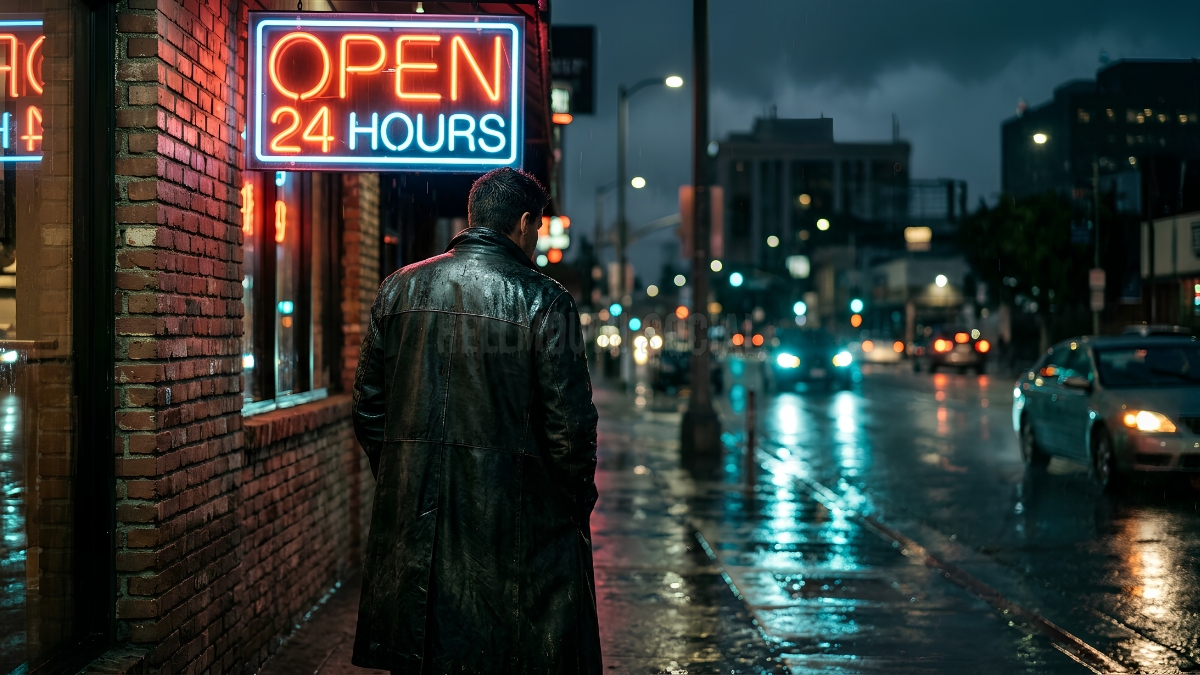
The episodes are the same. The brooding is the same. Angel is still standing under a neon sign in a leather coat he absolutely cannot be comfortable in. Cordelia is still getting visions that ruin her day. Wesley is still one bad decision away from growing a beard and making everything worse. Everything is exactly where we left it.
I'm the one who changed. You’re the one who changed.
When I first watched Angel, I was watching it as a teenager watches things — for the romance, the fights, and Cordelia’s hilarious takes. I thought Angel's whole deal was tragically cool. A cursed vampire with a soul, running a detective agency, haunted by his past? Sign me up, baby! I wanted his leather coat. I wanted the brooding. I did not, at the time, clock that a grown man had moved to an unaffordable city, started a small business with no capital, and was working nights for clients who mostly couldn't pay him.
Now I'm a Xennial.
Somewhere between dial-up internet and my current inability to sleep wrong without injuring myself, the whole show rearranged itself. I rewatch an episode now and find myself worrying about Angel's overhead. I understand, in my bones, why Wesley looked so tired. I have spent real time wondering how a detective agency with three employees and zero paying customers made payroll in Los Angeles.
The demons are still scary.
The small-business accounting is somehow scarier.
And that's the strange gift of revisiting Angel in your forties. The show didn't grow up. We did — and the show was apparently waiting for us the whole time, because every single season turns out to be a different strategy for surviving adulthood.
I've come to believe there are five of them. There's The Idealist who still thinks one well-meaning person can fix things. The Brooder who vanished so far into the work that they forgot to come back. The Reluctant Caretaker who became responsible for other humans without quite agreeing to it. The Spiraler currently watching the sky go dark over their entire life. And The Lifer who took the corporate job, made the compromise, and kept fighting anyway, mostly out of spite.
Before we go any further, take a moment to find out which one adulthood turned you into.
Take the Angelverse quiz, then come back and see how accurately a brooding vampire detective predicted your thirties and forties. I'll wait. I've got nowhere to be — I'm a Xennial, my social calendar cleared itself out around 2014.
The Helping-the-Helpless Idealist (Season 1): Before We Knew How Dark It Got
Every friend group has one.
They're the person who just found their thing. New mission, new side project, new sense of purpose they describe to you with a slightly alarming light in their eyes. When a problem appears, their first instinct isn't dread. It's, "Okay, how do we fix this?"
This person is a Season 1 Angel.
Season 1 is Angel at his most hopeful, which is a funny thing to say about a show this gloomy, but it's true. He rolls into Los Angeles, hangs out a shingle, and decides his entire reason for existing is to help the helpless. He doesn't have a real plan. He has a mission statement and a basement office. He builds a found family out of whoever wanders in — a half-demon with a drinking problem, a former mean girl whose biggest credit was a regional commercial — and he genuinely believes this will work.
I love this guy, because I have been this person. I have reorganized my entire life around a new purpose at least four separate times, and I have the abandoned hobby graveyard to prove it: a guitar, two notebooks promising to change everything, and a sourdough starter I named and then killed through neglect. The Idealist in me is always sure that this time, with enough effort and a reasonably good plan, the thing will work out.
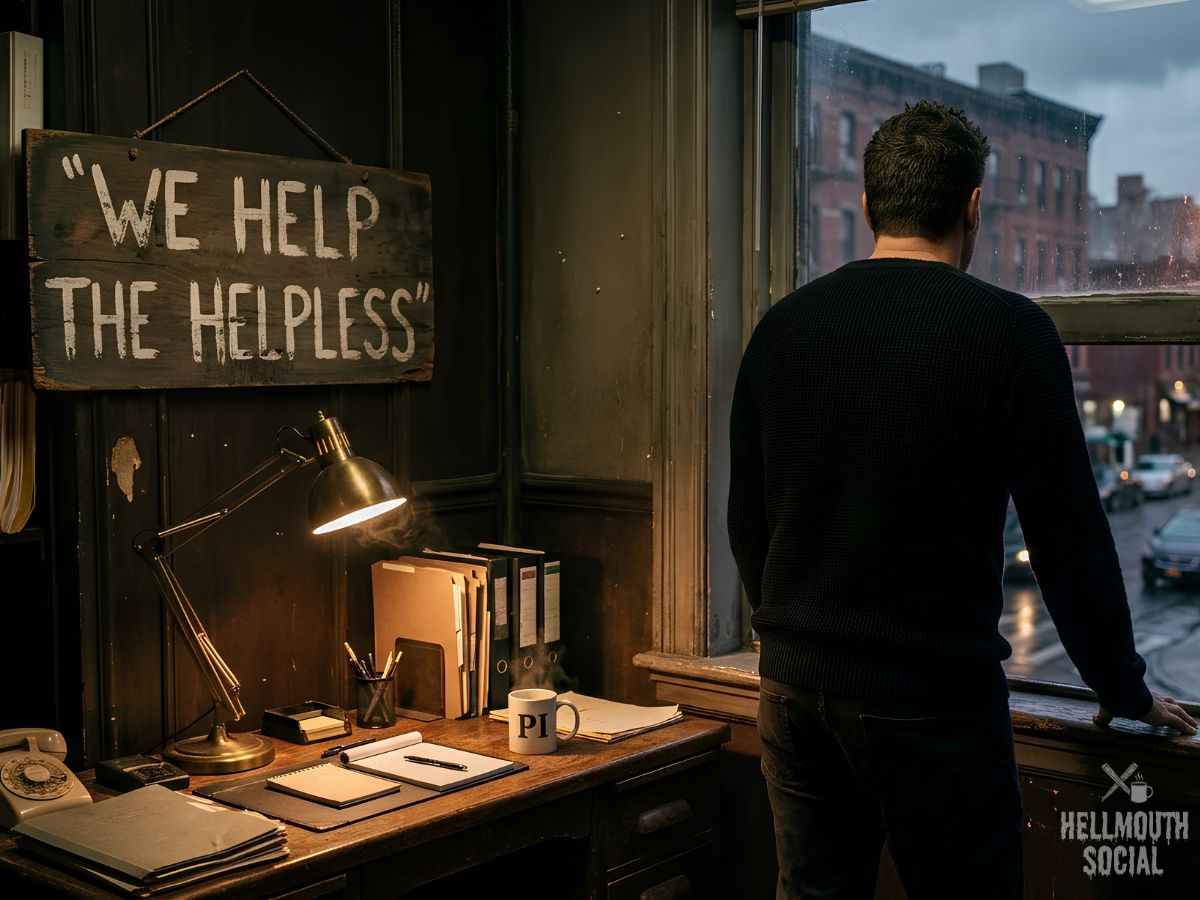
The Idealist's great strength is conviction.
They haven't been ground down yet.
They still believe most problems have solutions, that people mostly mean well, and that showing up matters. In a world full of people who've decided in advance that nothing works, that belief is genuinely valuable. It's the thing the rest of us quietly run on when our own tanks are empty.
The trouble is that the Idealist hasn't found out yet how dark it can get.
Season 1 Angel doesn't know what's coming — and neither do we, the first time. He throws himself in before he's checked the budget, the bandwidth, or the body count. He assumes everyone's playing by the same rules, then learns the hard way that half the people he meets never read the rules and the other half are setting them on fire for fun.
But here's what I'll defend about the Idealist forever: they keep going anyway. They're the friend who suggests the trip, the coworker who volunteers before they know what they volunteered for, the person who still says "let's see where this goes" and actually means it.
We could all use a little more of that. At minimum, it makes the group chat less bleak.
The Beige-Era Brooder (Season 2): When the Mission Eats the Person
Then there's the season where Angel disappears into the work so completely that he stops being recognizable.
Fans call this stretch "Beige Angel" — a nickname for the muted, washed-out look of the show during his darkest arc, when he gets so obsessed with destroying his enemies that he fires his entire team and starts skulking around alone like a man who has developed strong opinions about overhead lighting. He's not a hero in this stretch. He's a guy who mistook isolation for focus and tunnel vision for dedication.
You know this person. You've maybe been this person.
I have absolutely been this person. There was a stretch where I cared so much about one project that I stopped answering texts, declined every invitation, and told myself I was "locked in". I wasn't locked in. I was a hermit with a deadline and a worsening relationship with sunlight. I had become ‘Beige Asha’.

The Brooder's strength is real, and I don't want to undersell it. When they care, they care — with a depth and seriousness most people never bring to anything. The same intensity that makes them disappear is what makes them formidable when it's pointed in the right direction.
But the trap is right there in the name. The mission starts eating the person. The work that was supposed to give life meaning becomes the thing crowding the life out. You convince yourself the isolation is noble — that you're sacrificing, grinding, doing what has to be done — when really you've just stopped picking up the phone.
What saves Angel is the epiphany. It's one of the best moments in the whole series: he claws his way out and lands on the idea that if nothing we do matters, then all that matters is what we do. The mission was never the point. The showing-up was.
My epiphany was less cinematic. Mine arrived as a concerned email from a friend asking if I was alive. But it did the same job.
The Brooder always gets their epiphany eventually. It just rarely comes with the good lighting.
The Reluctant Caretaker (Season 3): The Responsibility Nobody Signed Up For
Nobody decides to become responsible for other people.
It just happens, usually while you're looking the other way.
Season 3 is where Angel gets domestic in the most chaotic way imaginable. Angel becomes a father. Connor arrives, and suddenly the show isn't about saving strangers in Los Angeles — it's about keeping one small, specific person alive and not ruining him. Everything gets personal. Darla makes an impossible choice. Wesley, trying to do the right thing, does a catastrophic thing. Loyalty and love and betrayal all tangle together until you can't tell which is which.
This is the season for the Xennial who became the responsible one without ever applying for the job.
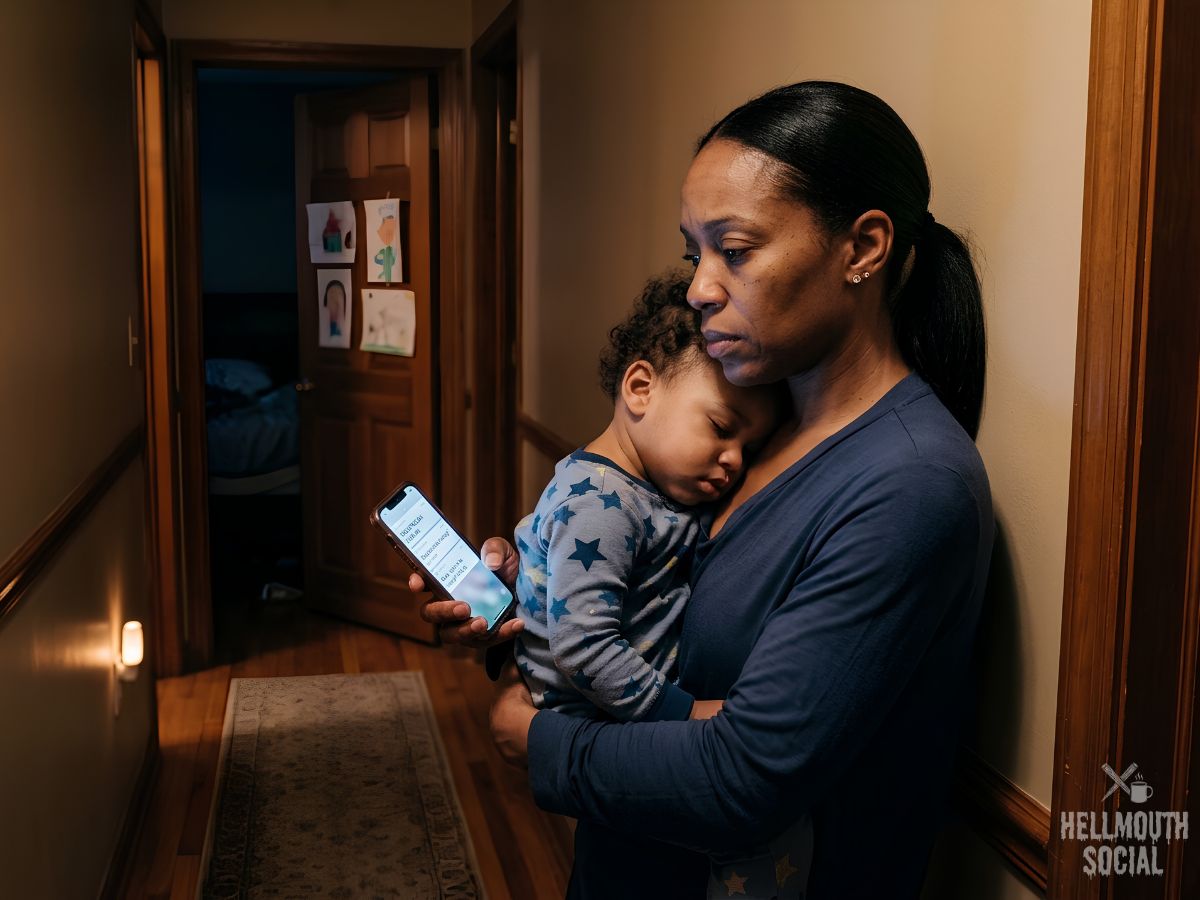
You know the type, because half of us are the type. You're the one who became everyone's emergency contact. You're handling the aging parent and the kids and the friend who's going through it, often in the same afternoon. You did not receive a manual. The manual does not exist.
You're improvising care for people who depend on you, and you're terrified of getting it wrong.
I won't pretend I'm fully in this season, because I'd be flattering myself about how responsible I am. But I've felt its gravity — the moment you realize someone is counting on you and there's no one behind you to catch it if you drop it. It rearranges you.
The Caretaker's strength is fierce, unglamorous love.
They show up even when it costs them, and it usually costs them. The trap is the same loyalty curdling into resentment when nobody notices — when the care becomes invisible because you're so reliable that everyone assumes you're fine.
The Caretaker is rarely "just fine". The Caretaker is doing their best with no script, the way Angel raised a kid in a hotel full of monsters. And the fact that anyone makes it through that season at all is, honestly, a small miracle.
The Sunless-Sky Spiraler (Season 4): When Everything Catches Fire at Once
Some seasons aren't about one problem. They're about all of them, arriving simultaneously, on fire.
Season 4 is the one where the sky literally goes dark over Los Angeles. The Beast shows up, the rain turns to fire, the apocalypse stops being theoretical, and the whole story spins out of anyone's control. It's the most chaotic, most divisive, most "wait, what is even happening?!" stretch of the entire series. And if you're being honest about it, you've had a Season 4.
I've definitely had a Season 4 (or two). Most of us have. It's the month when the car dies, the job wobbles, the health scare lands, and the surprise bill shows up — all at once, like they coordinated.
You're not solving a problem anymore.
You're just trying to stay upright while the sky does something it's not supposed to do.

Now, if you landed here from the Angelverse quiz, I want to be clear about something, because "Spiraler" sounds like an accusation and it isn't one. The Spiraler isn't the person falling apart. The Spiraler is the person who kept functioning while the sky went dark — who made it to the other side of a genuinely terrible stretch and is still standing, slightly singed, fully operational.
That's not a diagnosis. That's a credential.
The strength here is the rawest kind there is: you keep moving when nothing makes sense. No optimism required, no plan available, just forward motion through conditions that would flatten a calmer person.
The trap is letting the crisis become your whole identity — losing the ability to tell "this is temporary" from "this is just how it is now". Season 4 is genuinely awful to live through. But the thing Season 4 quietly promises is the thing worth holding onto: even the apocalypse wraps up eventually. The sky comes back.
You get handed a strange new normal and a chance to catch your breath.
You survived the part that felt unsurvivable, and that turns out to be most of the battle.
The Wolfram & Hart Lifer (Season 5): Selling Out, Still Fighting
And then there's the season where the heroes take the corporate job.
In Season 5, the gang takes over the Los Angeles branch of Wolfram & Hart — the monstrous, all-powerful evil law firm they spent four seasons fighting. They get the offices, the resources, the budgets, the titles. They also get the compromise: they're now working inside the very machine they used to battle, telling themselves they can do more good from the inside than they ever could from a basement.
This is the most adult season there is, and it might be the one I relate to most these days (especially episode 18, “Origin”)
The Wolfram & Hart Lifer is the mid-career Xennial who made peace with the mortgage and the org chart.
You took the stable thing.
You learned to talk about "deliverables" without visibly dying inside.
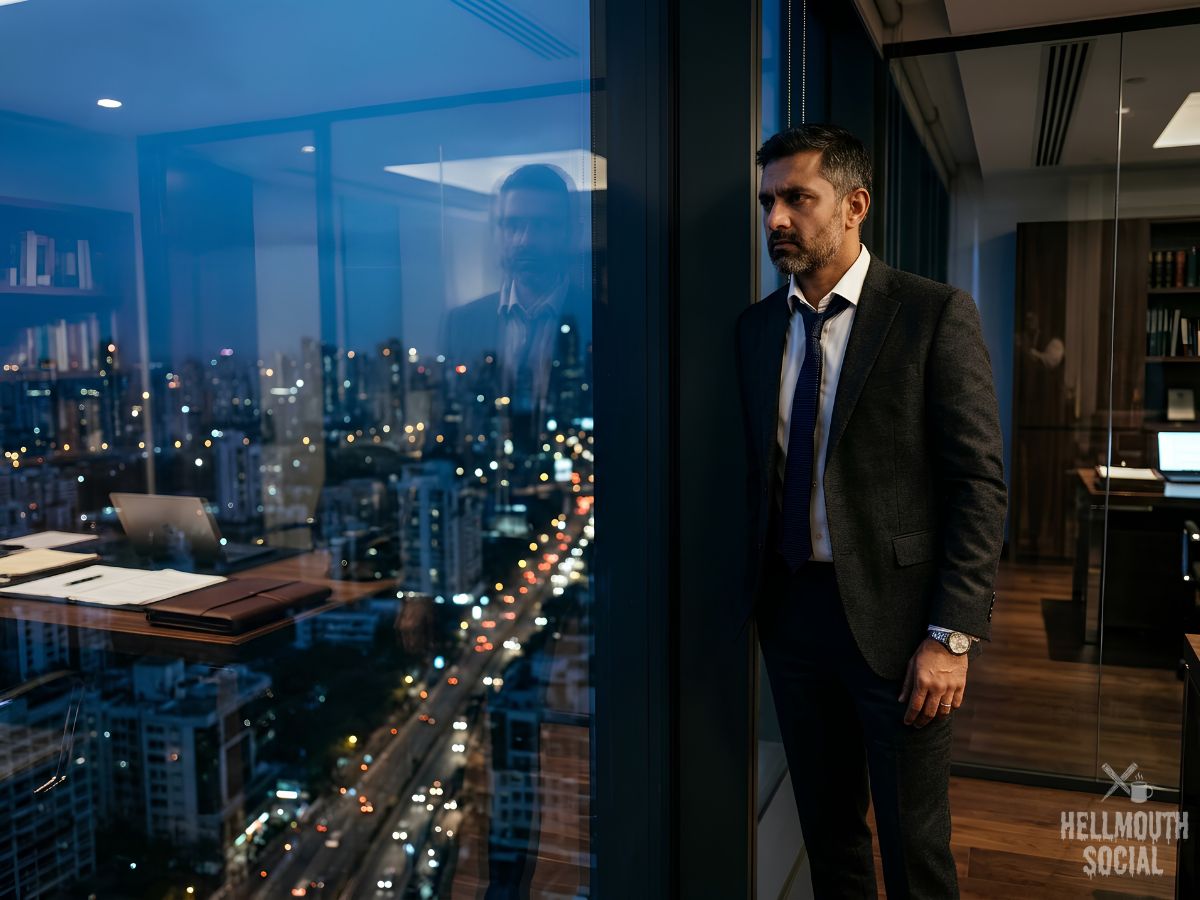
From the outside you look like you sold out, and on the bad days you wonder if you did. But underneath the cynicism, you kept a small flame of the old mission burning. You're still trying to do something decent, even from inside the building you swore you'd never work in.
I know this feeling intimately. I have absolutely caught myself defending a compromise I'd have mocked at twenty-five, then quietly using the resources that compromise bought me to do something I actually believe in. That's the whole Season 5 bargain.
The strength here is the most hard-won resilience of all: fighting on with no guarantee you'll win, because the fight is the point. Which is exactly where the series ends. Not Fade Away — the finale — has the team take on an unwinnable battle in a rainy alley, fully aware they're probably going to lose, and they swing anyway.
Angel's last line is essentially: let's get to work.
The trap, of course, is the compromise hardening into surrender — mistaking the corner office for the mission, forgetting why you took the deal in the first place. But the Lifer at their best does the most grown-up thing imaginable: shows up to a fight they might not win, throws the punch anyway, and then asks if anyone wants to grab a coffee after.
Honestly? That's the dream.
What Adulthood Actually Changed
The reason Angel holds up is the same reason its parent show (Buffy) does: it grew up right alongside us, without changing a single frame.
The episodes haven't changed. The brooding hasn't changed. The demons definitely haven't changed. But every time I come back to it, I notice something I was too young to see before — like how the real horror of Season 1 isn't the vampires, it's the rent, or how Wesley aged about forty years in spirit across five seasons and I now understand exactly why.

Because each season is a different way of meeting adulthood.
The Idealist meets it with hope.
The Brooder meets it with an intensity that nearly swallows him.
The Caretaker meets it with love he didn't plan for.
The Spiraler meets it with sheer endurance while the sky burns.
And the Lifer meets it with a compromise and a refusal to fully give up.
None of these are wrong. And here's the part I've made my peace with: I'm not just one of them. I'm all five, depending on the week. I'm an Idealist on Monday morning with a fresh plan, a Beige-Era Brooder by Wednesday when the plan eats my evenings, a Sunless-Sky Spiraler the moment an unexpected charge hits my banking app, and a Wolfram & Hart Lifer by Friday afternoon, making peace with the fact that I have a job and the job has meetings.
The point was never to figure out which season you'd have picked. We spent enough of our youth trying to decide who we were. The more interesting question — the one Angel keeps asking every time I rewatch it — is who adulthood actually turned us into. And the honest answer is that it keeps turning us into new things, season after season, long after we thought the story was over.
Maybe that's why the show still lands for those of us getting older. Underneath the vampires and the prophecies and the law firm from hell, Angel was always a story about what happens after you grow up — the unglamorous, ongoing, weirdly heroic work of just continuing to show up.
So, Which Season Are You?

Adulthood doesn't come with a Watcher. It doesn't come with a prophecy, a clearly defined arc, or even a decent explanation of what's happening in Season 4. You just keep showing up, episode after episode, hoping it adds up to something.
If you're not sure which Angel season adulthood turned you into, find out here!👇

And if you want more of this — more Xennial nostalgia, more supernatural pop-culture sociology, more of me overthinking the property values of the Hellmouth — consider joining the Hellmouth Social Council. Adulthood may not come with a Watcher, but it helps to have a Scooby Gang. I'm Head Watcher Asha, and I'd genuinely love to have you in mine.