
Custom
AI-Generated Designs for Creators Who Sell
Order custom t-shirt art, wall prints, clipart sets, and more — all tailored to your exact style!




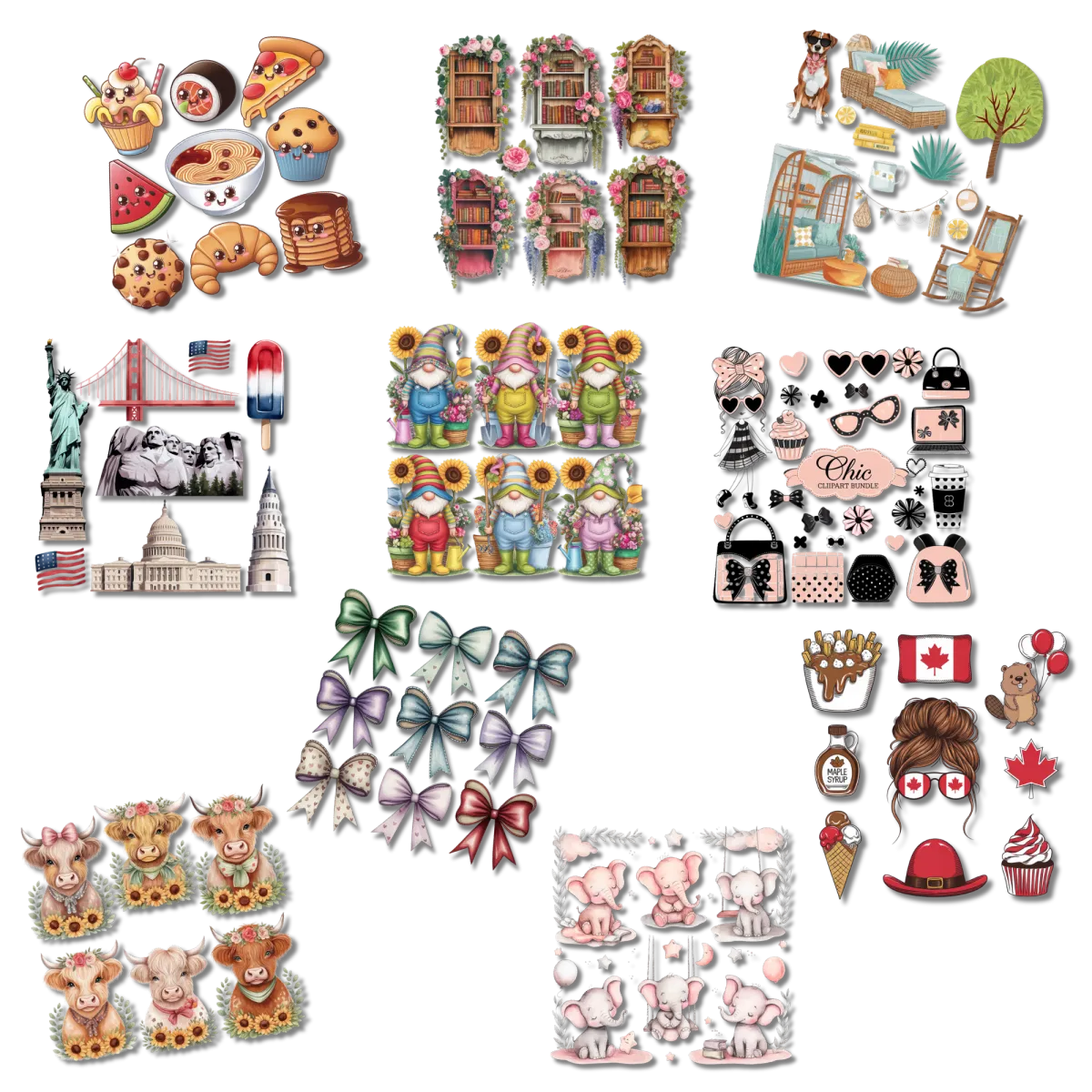



In need of stunning images for your next project?
Let me help you by crafting accurate prompts to generate amazing quality outputs using Ideogram — no guesswork, no fluff. Whether you need bold t-shirt designs, cute clipart sets, moody book covers, or scroll-stopping Pinterest pins, I’ll handle the creative direction so you can focus on what you do best: creating, selling, and growing your brand. Pick your image type below, fill out a quick form, and I’ll take care of the visuals.
Hello There!
Hey, I’m Asha — your AI design whisperer! Fueled by caffeine and Ideogram, I use custom prompts and creative strategy to turn everyday ideas into scroll-stopping designs for shirts, prints, pins, and more. No fluff. No filler. Just clean, custom visuals you can actually use commercially.

Want a closer look at my design style?
I've built an impressive gallery of designs that should give you an idea as to the type of images I can create for you - especially for black colored apparel. Hit that button below and explore my public profile on Ideogram.

Custom AI-generated images made simple
How the Process Works

Step 1
Choose your design type + fill out a form.

Step 2
Pay 50% deposit and I get to work.

Step 3
Pay for the completed work and get your final files.

Want to Create Your Own Designs Like I Do?
Grab my exact prompt system and start designing with confidence in Ideogram.
Latest from the Blog
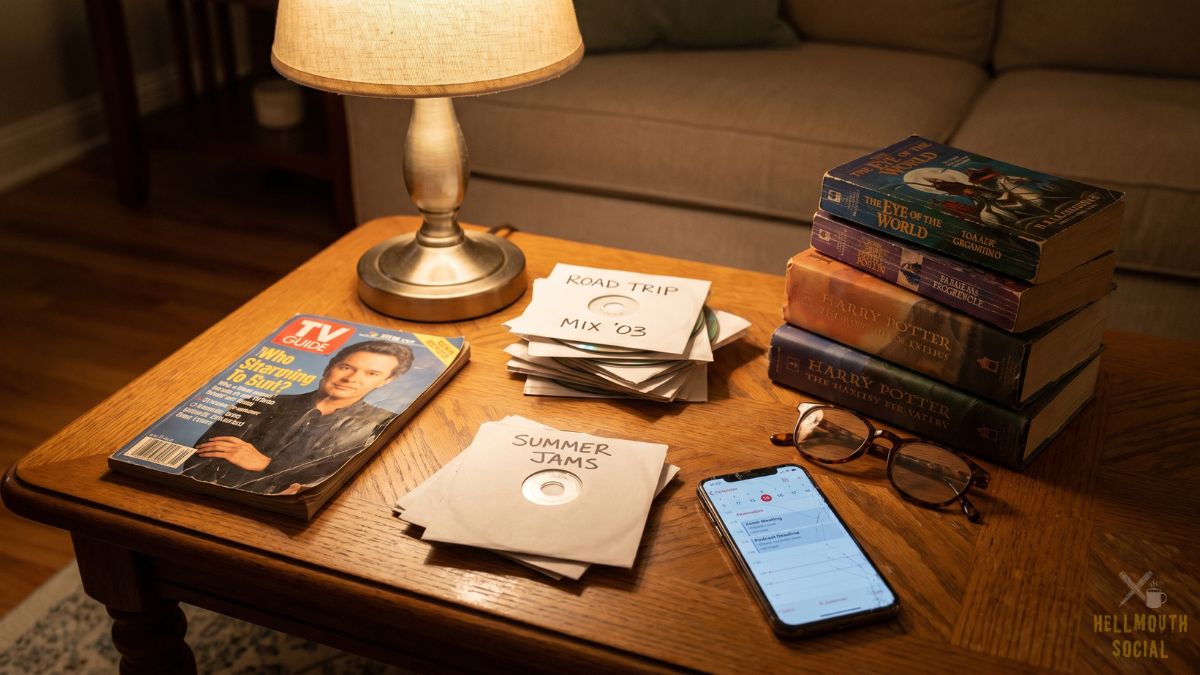
What Buffy Era Did Adulthood Turn You Into?
The Show Didn't Change. We Did.
Every Buffy fan has a favorite season.
Ask ten fans and you'll get twelve answers, three passionate monologues, and at least one person insisting that everything went downhill after graduation. This is how fandom works. We gather around a beloved piece of media and spend the next twenty years debating which version of it was best.
But here's the thing: the show hasn't actually changed.
The episodes are the same. The dialogue is the same. The vampires are still lurking in cemeteries with questionable urban planning. Giles is still removing his glasses whenever the plot requires a serious conversation. Everything is exactly where we left it.
We're the ones who changed.
When we first watched Buffy, most of us were focused on the characters. We wanted to know who we'd date, who we'd be friends with, and whether owning a leather jacket automatically made someone cooler. We saw the show through the eyes of teenagers because, inconveniently, we were teenagers.
Now we're Xennials.
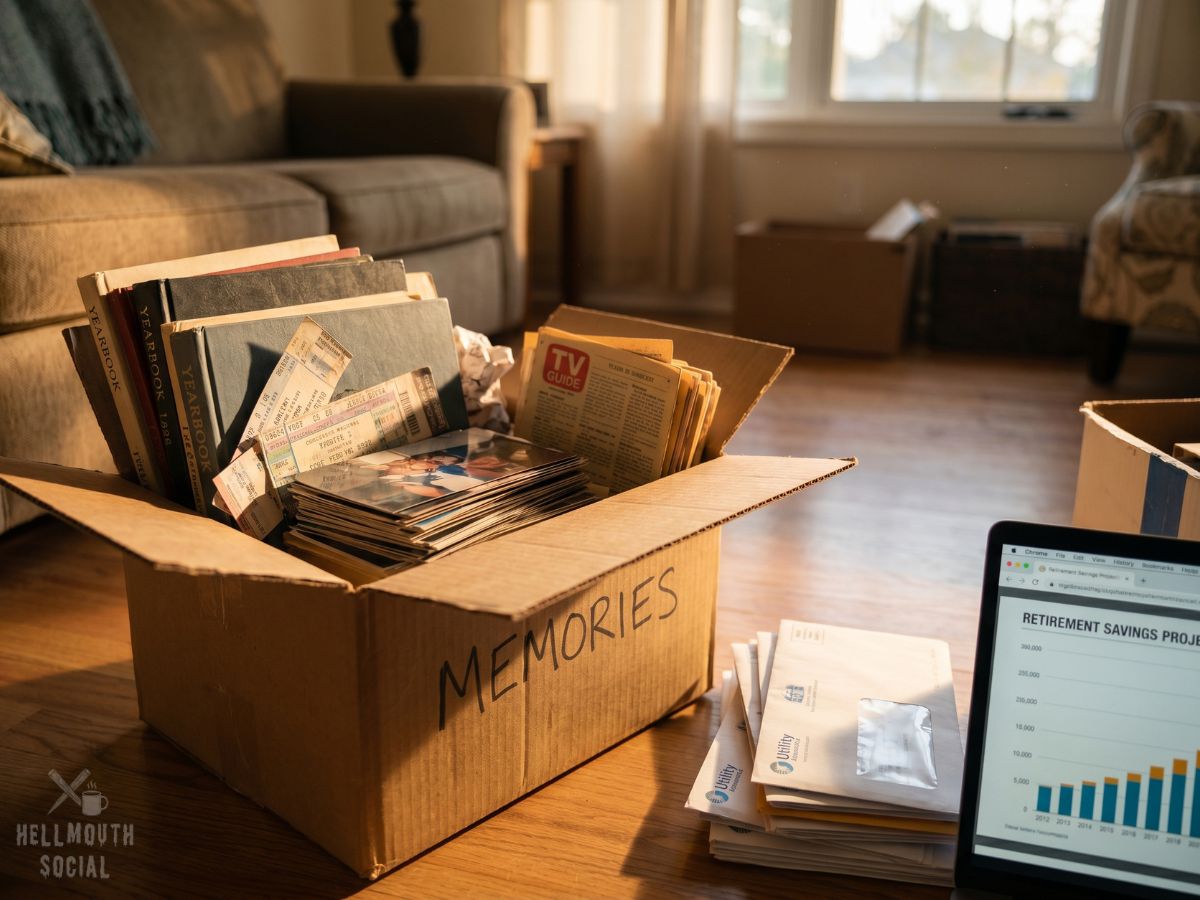
Somewhere between dial-up internet and lower back pain, our perspective shifted. We rewatch an episode and suddenly find ourselves sympathizing with Joyce. We understand why Giles always looked exhausted. We spend an alarming amount of time wondering how anyone in Sunnydale could afford rent.
The vampires are still terrifying.
The property taxes are somehow worse.
And that's why revisiting Buffy as an adult feels different. Not because the show changed, but because adulthood quietly rearranged the furniture inside our brains.
Over time, many of us have drifted toward one of four Buffy-era archetypes. There's the hopeful newcomer who still believes life comes with instructions. The organizer who accidentally became responsible for everyone else's problems. The wanderer who's perpetually one podcast away from reinventing their entire personality. And the survivor who's running primarily on caffeine, experience, and increasingly specific opinions about ergonomic office chairs.
Before we continue, take a moment to discover your Buffy era.
Take the Buffy Era Quiz, then come back and see how accurately Sunnydale predicted your adulthood.
The Sunnydale Newcomer: Before We Learned What a Password Manager Was
Every friend group has one.
They're the person who signs up for pottery classes, downloads language-learning apps, and genuinely believes this might finally be the year they stick to a consistent stretching routine. When a new opportunity appears, their first instinct isn't suspicion. It's curiosity.
This person is the Sunnydale Newcomer.
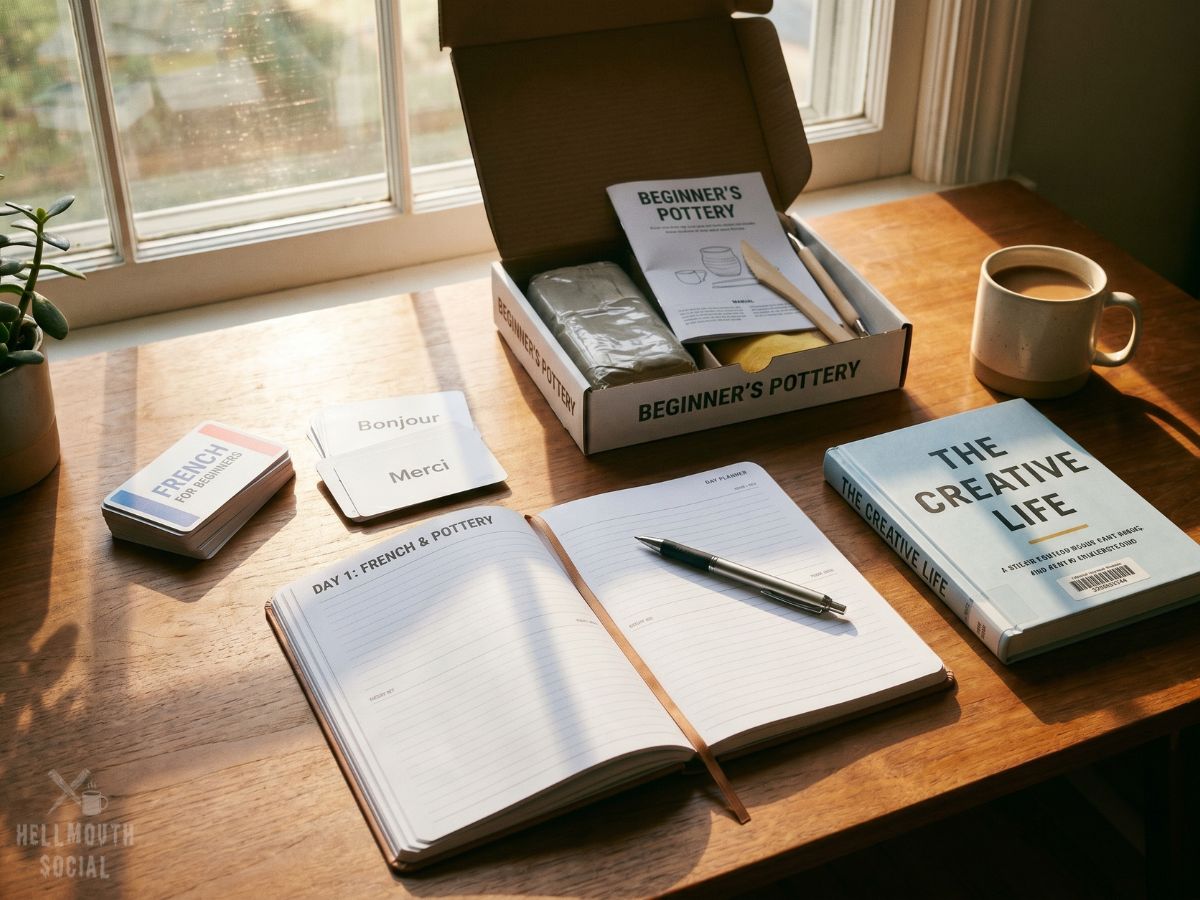
Not because they're young, necessarily. Some of the biggest Newcomers I know are well into their forties. Age has very little to do with it. Being a Newcomer is a state of mind. Specifically, it's the increasingly rare belief that most problems can be solved with effort, preparation, and perhaps a reasonably organized spreadsheet.
Remember that version of Buffy from the early seasons? She hadn't yet spent years battling ancient evil, navigating existential crises, or discovering that adulthood is mostly a series of forms nobody tells you how to complete correctly. She approached problems with a mixture of optimism and determination. The world was dangerous, sure, but it also felt manageable.
Newcomers tend to see life the same way.
When they encounter a challenge, they assume there must be a solution. When something goes wrong, they look for a lesson. When faced with uncertainty, they think, "Well, let's figure this out."
The rest of us hear that sentence and immediately become concerned for their wellbeing.
Because if adulthood teaches anything, it's that some problems don't have solutions. Some have waiting lists. Some require three separate passwords. Some involve speaking to a customer service representative who appears to be communicating from another dimension entirely.
Yet there's something admirable about the Newcomer mindset.
While the rest of us are busy assuming the worst, they're still willing to believe people generally mean well. They're open to learning new things. They adapt. They evolve. They haven't allowed disappointment to calcify into cynicism.
Of course, this approach comes with risks.
Newcomers occasionally underestimate how weird adulthood can become. They assume everyone is operating from the same rulebook, only to discover that half the population hasn't read the rules and the other half are actively setting them on fire.
But even then, they keep moving forward.
They're the coworker who volunteers for a project before learning what the project actually is. They're the friend who suggests trying a new restaurant, hobby, or vacation destination. They're the person who still says, "Let's see where this goes", and somehow means it.
Frankly, the rest of us could probably use a little more of that energy.
At the very least, it would make meetings more tolerable.
The Scooby Organizer: The Friend Who Accidentally Became Human Resources
Nobody wakes up one morning and decides to become The Responsible One.
It happens gradually.
First, you remember a birthday. Then you make a dinner reservation because nobody else has. Before long, you're coordinating vacation plans, maintaining three separate group chats, and somehow possess detailed knowledge of everyone's dietary restrictions.
At some point, without your knowledge or consent, you've become The Scooby Organizer.
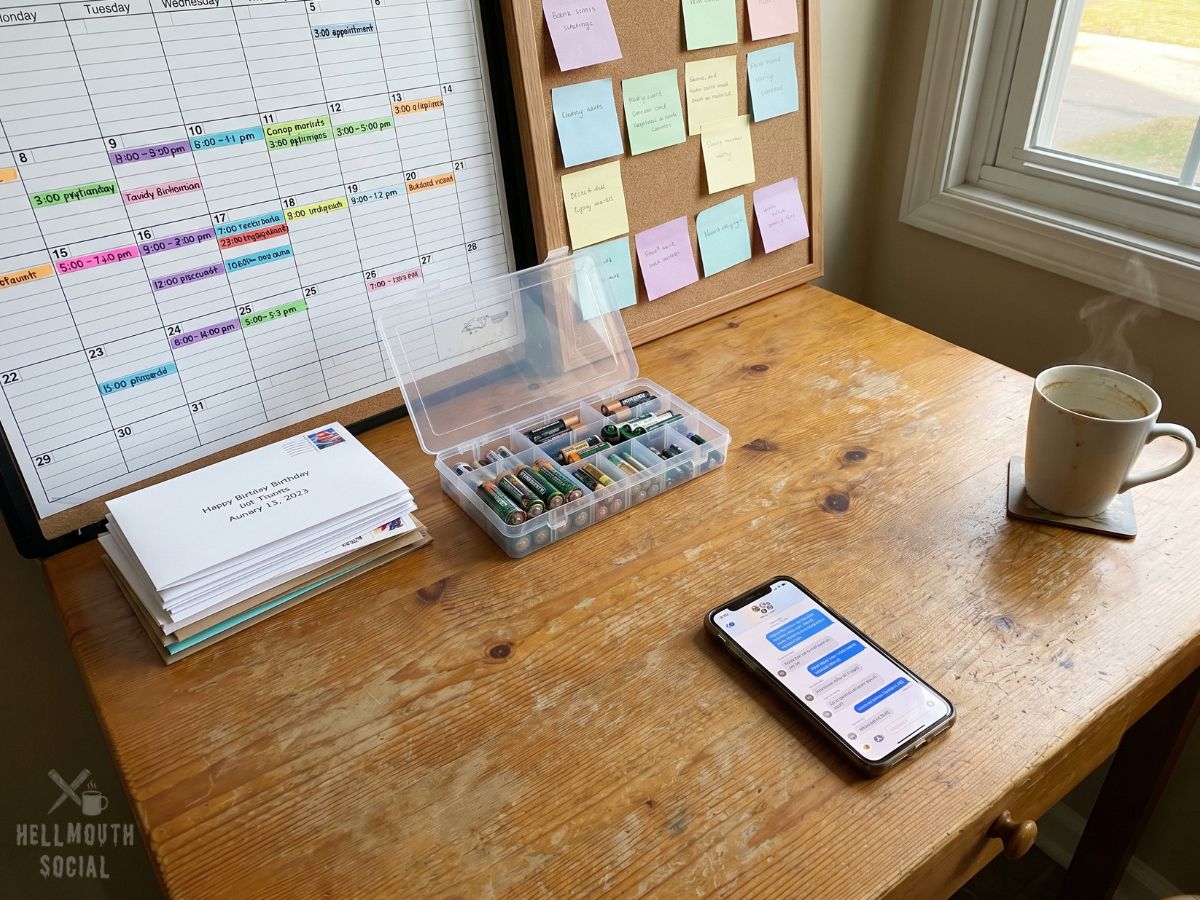
If the Sunnydale Newcomer believes life can be solved with optimism, the Organizer believes life can be solved with a calendar invite.
Need a restaurant reservation? Ask the Organizer.
Need somebody to remember the address? Ask the Organizer.
Need to know whether anyone brought extra batteries? The Organizer already packed them two days ago.
Much like Giles, they've become the unofficial keeper of information. The difference is that Giles was dealing with ancient prophecies and mystical texts. The modern Organizer is dealing with Google Docs and family scheduling conflicts. Arguably the more terrifying assignment.
The funny thing is that Organizers rarely see themselves as leaders.
They're not trying to take charge.
They're simply responding to the vacuum created when nobody else does.
This is one of the great Xennial superpowers. We were raised in an era that required a certain level of self-sufficiency. We learned how to troubleshoot technology without tutorials. We survived group projects before cloud storage. We printed directions from MapQuest and trusted them with our lives.
As a result, many of us developed a dangerous competency.
Once people discover you're capable, they start bringing you problems.
The Organizer's greatest strength is reliability. They're the person who quietly keeps things moving. They handle details that nobody notices until they're forgotten. They perform an astonishing amount of emotional labor without ever adding it to their résumé.
Unfortunately, this strength contains the seeds of its own destruction.
Because Organizers often find themselves carrying responsibilities they never actually agreed to carry.
Somewhere along the way, they become everyone's emergency contact.
They remember appointments that aren't theirs. They follow up on problems they didn't create. They spend significant portions of their lives solving logistical challenges that originated entirely in other people's decision-making.
And because they're competent, everyone assumes they're fine.
The Organizer is rarely fine.
The Organizer istired.
But they're also the reason the trip happened, the birthday was celebrated, and the friend group remains loosely connected instead of drifting apart into a collection of unread text messages.
Nobody formally appointed them to this position.
Yet somehow everyone expects them to know what's going on.
Which, now that I think about it, is probably the most Giles-like experience imaginable.
The Existential Wanderer: Three Podcasts Away From Reinventing Their Entire Life
If the Scooby Organizer spends their time figuring out how to get everyone where they're going, the Existential Wanderer spends their time wondering whether they're headed in the right direction at all.
You know this person.
In fact, there's a reasonable chance you are this person.
The Wanderer is perpetually re-evaluating their life choices. Not because they're unhappy, necessarily, but because they're deeply suspicious of autopilot. While other people seem content to settle into routines, the Wanderer is constantly peering over the horizon, convinced there might be a better version of themselves just out of sight.

As a result, they reinvent themselves with surprising regularity.
New career goals. New hobbies. New philosophies. New morning routines. New notebooks purchased with the sincere belief that this one will finally unlock the secrets of personal transformation.
A Wanderer's home often resembles an archaeological dig of previous identities. Somewhere there's a guitar they were definitely going to learn, a half-finished online course, a yoga mat gathering dust, and enough self-help books to survive a small apocalypse.
This isn't necessarily a bad thing.
One of the Wanderer's greatest strengths is their willingness to grow. They're curious, self-aware, and remarkably open to change. While other people cling to outdated versions of themselves, the Wanderer is willing to ask uncomfortable questions.
What if I want something different?
What if success doesn't look the way I thought it would?
What if I've outgrown this chapter?
Those aren't easy questions, and plenty of people spend years avoiding them.
The Wanderer leans in.
Of course, this same strength can become a trap.
Because there's a fine line between self-reflection and treating your entire life like a software beta test.
At some point, the search for answers becomes the thing preventing you from finding them. Every decision requires additional research. Every possibility demands further analysis. Every crossroads becomes an opportunity to open seventeen browser tabs and spend three hours reading articles written by strangers who claim to have achieved enlightenment through intermittent fasting.
The Wanderer is particularly vulnerable to the modern internet, which has transformed personal growth into a competitive sport. Every day brings a new expert, a new framework, or a new podcast explaining why your current life could be dramatically improved by making a few simple changes that somehow require purchasing a course.
It's exhausting.
And yet, there's something undeniably admirable about the Wanderer. They refuse to believe that personal growth has an expiration date. They remain open to new ideas, new experiences, and new possibilities long after many people have settled into comfortable certainty.
They're three podcasts away from changing careers, one documentary away from moving across the country, and seven browser tabs away from a personal breakthrough.
Whether that breakthrough actually arrives is almost beside the point.
The important thing is that they're still looking.
And in a world increasingly obsessed with certainty, there's something refreshingly human about that.
The Season 6 Survivor: Running Entirely on Coffee and Pattern Recognition
If the Sunnydale Newcomer believes things will work out and the Existential Wanderer believes there's still a better path waiting to be discovered, the Season 6 Survivor has reached a different conclusion entirely.
Things will probably be fine.
Not because the universe is fair.
Not because everything happens for a reason.
Simply because they've already survived so much nonsense that another crisis barely registers.

The Season 6 Survivor is remarkably easy to identify. They're the person who remains calm while everyone else is spiraling. A flight gets cancelled. The project falls apart. The economy does something alarming. The group chat erupts into chaos.
The Survivor shrugs and asks if anyone wants coffee.
This isn't confidence so much as pattern recognition.
After a certain age, you begin to notice that most emergencies eventually become stories. The catastrophe that seemed world-ending in 2008 became a funny anecdote by 2015. The thing that kept you awake for three weeks eventually became something you barely remember. Even the disasters that genuinely mattered somehow became survivable.
The Survivor knows this because they've already lived through enough plot twists to fill an entire season of television.
Recessions.
Layoffs.
Housing crises.
Rising rents.
Corporate restructures.
Social media platforms that appeared, dominated society, and then vanished into the digital equivalent of a vampire dust pile.
At some point, life stops feeling like a carefully planned journey and starts feeling like you're repeatedly being handed increasingly strange side quests.
And yet, somehow, you keep completing them.
That's the Survivor's greatest strength?
Not optimism.
Not ambition.
Endurance!
The ability to absorb a ridiculous amount of uncertainty and continue functioning anyway.
They're resilient because they have evidence. Every difficult thing they've already survived becomes proof that they'll probably survive the next thing too. They've developed perspective, learned which battles matter, and discovered that many problems become substantially less threatening after a good night's sleep.
Or at least after a good cup of coffee.
Of course, survival comes with side effects.
The longer you spend enduring things, the easier it becomes to mistake exhaustion for wisdom. Cynicism starts masquerading as realism. Hope begins to sound suspiciously like a marketing campaign. Somewhere along the way, the Survivor risks forgetting that life is supposed to contain moments of joy in addition to moments of endurance.
This may explain why a cancelled appointment feels less like a scheduling change and more like a religious experience.
The Season 6 Survivor understands the value of unexpected peace.
They've developed strong opinions about comfortable shoes, ergonomic office chairs, and the importance of leaving social events before the parking lot becomes complicated. They've reached the stage of life where an empty Saturday afternoon feels more luxurious than anything advertised in a travel brochure.
And honestly? They've earned it.
Because beneath the dry humor and carefully managed expectations is someone who keeps showing up.
Again and again.
The world changes. Technology changes. The algorithms change. The trends change. The definition of adulthood itself seems to change every few years.
The Survivor adapts.
Maybe not enthusiastically.
Maybe not gracefully.
But reliably.
And sometimes that's the most impressive superpower of all.
What Adulthood Actually Changed

One of the reasons Buffy has aged so well is that it somehow manages to grow alongside its audience.
The episodes haven't changed. The dialogue hasn't changed. The monsters certainly haven't changed. Yet every time we revisit the show, we notice something different. As teenagers, we focused on the characters. As adults, we find ourselves wondering how Giles managed to survive years of supervising teenagers without developing a permanent eye twitch.
That's because every Buffy era represents a different strategy for navigating adulthood.
The Sunnydale Newcomer meets uncertainty with optimism. The Scooby Organizer meets it with preparation. The Existential Wanderer meets it with curiosity. The Season 6 Survivor meets it with resilience and a travel mug full of coffee.
None of these approaches are wrong. In fact, most of us are probably a combination of several. We may spend our weekdays as Organizers, our weekends as Wanderers, and transform into Survivors the moment an unexpected expense appears in our banking app.
The real lesson isn't figuring out which Buffy era you would have belonged to in high school. Most of us already spent enough time trying to figure out who we were back then. The more interesting question is who we've become since.
Maybe that's why the show continues to resonate with Xennials. Beneath the vampires, prophecies, and suspiciously high cemetery population, Buffy was always a story about growing up. We just didn't realize that the process would continue long after graduation.
So, which Buffy era are you?
If you're not entirely sure, take the Buffy Era Quiz and discover where you landed. Then, if you'd like more Xennial nostalgia, supernatural culture, and pop-culture sociology delivered directly from the Hellmouth, consider joining the Council.
After all, adulthood may not come with a Watcher.
But it helps to have a Scooby Gang.